- +34 961 201 963
- blanquer@blanquer.com

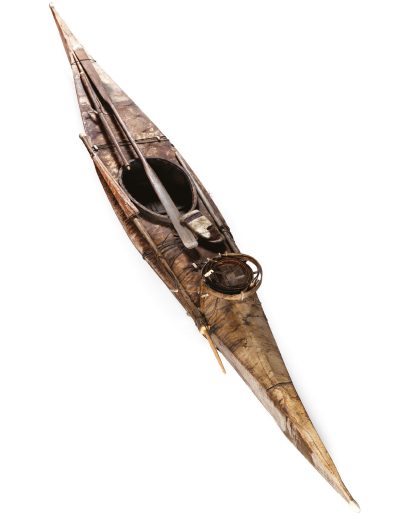
It is believed that the origin of the kayak could be located in the arctic regions and in the Paleo-Eskimo settlements that inhabited them more than 4,000 years ago. The word kayak (“qajaq”), in Inuit language, would mean something like “boat man” or “piece of floating wood”. This name would be given because the kayak was built to the size of its user. The oldest known kayaks are currently on display in the Ethnological Museum of Munich, in the North American Department.
These boats were built with a frame of wood or bone, mainly whalebone, and were covered with seal or porpoise skins, as they are naturally waterproof skins. Given the scarcity of vegetation in the lands where these settlements were inhabited, it is believed that the wood used for the boats was actually driftwood. It is suspected that these woods came from driftwood from rivers in America and Siberia and consisted mainly of birch, red and yellow cedar.
The kayak was and has been closely linked to pre-inuit and Inuit cultures, as it was the central axis on which the family subsisted. The kayak was the tool that allowed men to hunt. Until a man mastered his kayak and was able to hunt, he was not considered ready to marry. Therefore, children from an early age were put into kayaks to get them used to them and once they were 11 years old – at which age they were considered capable of their first hunt – the family would help them build their own kayak, and they were considered ready to marry.
The first modern, 100% wooden kayak on record originated in 1865 in Scotland, and was named Rob Roy canoe. Its creator was a lawyer J. Mc Gregor who tried to reproduce the kayaks he saw during his trips to Alaska and Kamchatka. For the construction of this boat, oak wood was used for the frame and cedar for the deck. This model spread to several European countries and was used for a long time.
Currently there are two main techniques for the construction of kayaks. The most commonly used is known as “stitch-and-paste”(Stich&Glue) and consists of stitching the different pieces of wood made to measure with copper wire, while gluing them together with epoxy resin. The other technique is “strip-built” (Strip-Built), which consists of placing strips of wood on a previously constructed frame. This last technique is simpler than the previous one, although we can also find mixed construction techniques which take the best part of each of them.
Regarding the woods used, more flexible woods such as oak or ash are usually used for the ribs or frame, while for the deck plan, woods such as Oregon Pine, Canadian Cedar, Oak, Ash, Beech, Samba, etc. are usually used. It is recommended that the wood used for the deck covers the entire length of the boat in a single piece and that it is also free of knots.