- +34 961 201 963
- blanquer@blanquer.com

THE SHIP THROUGH HISTORY
We often come across reports on curiosities, many related to the role that wood has played throughout history. For example, if we think about what was the first vehicle in the history of the world, we may be surprised to learn that it was a boat.
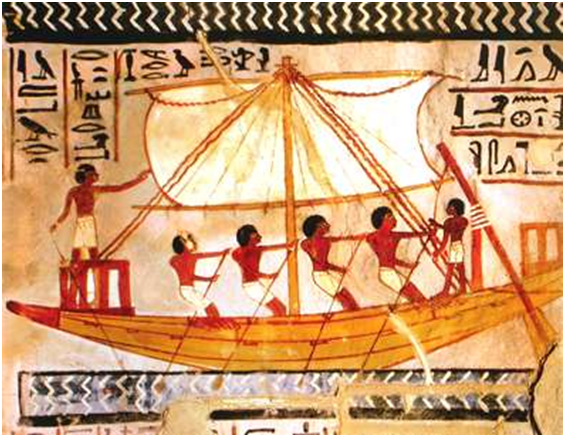
There are records that place them in Egypt in the year 3000 B.C., these first ships have become part of history, portrayed in countless films, documentaries and even music videos, and described in many stories. They plied the Nile River, playing such a fundamental role that they were able to promote the survival of the society of the time, giving them the possibility of moving goods and people across it, since, without it, Egypt would only be an arid desert. Although very few remains of these boats have been preserved, it has been enough to know how they evolved, starting with the unstable papyrus plant to large boats of Acacia or Cedar imported from Lebanon.
However, with the passing of time, ships have been improved, incorporating sails and rudders. During the 15th century, before colon discovered America and Magellan sailed around the world, ships were almost entirely made of two species, oak to create the structure and pine for details such as railings or the lining of the ship.
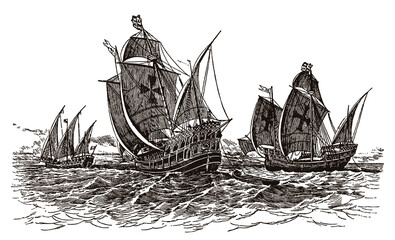
Although we know that oak is not the best for being in contact with water, at the time, it was coated with tar, which protects it for about two years, until it was removed, cleaned and re-coated with this substance.
In 1790 the first iron ships appeared, and displaced from the privileged place where wood was in the naval sector, it began to have a use similar to the one it has today. Almost entirely for decoration, manufacture of decks and structures for ships.
From the mid-19th century onwards, new materials and knowledge made it possible to appreciate wood and its characteristics, knowing that it could provide lightness, bending, durability and stability depending on the species.
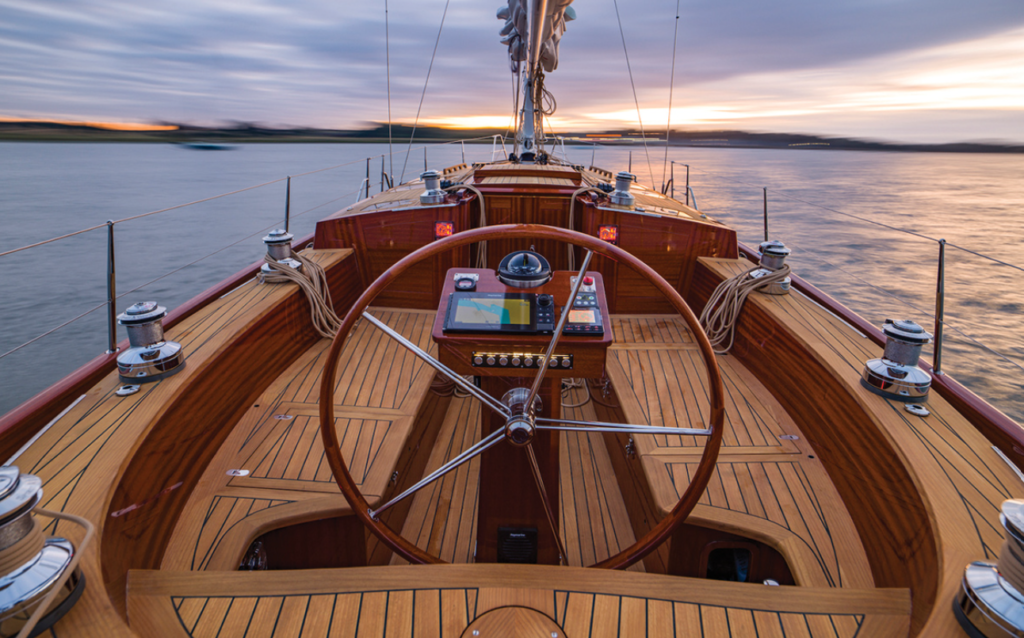
Boats withstand a lot of torsion, so we look for woods that are resistant to this type of bending, and many times this is achieved by softening the planks by means of temperature and steam. On the other hand, lightness is sought, since the lighter it is, the more it will facilitate the buoyancy of the boat, always taking into account that the mechanical resistance is not affected. A clear example is Oregon Pine wood, commonly used to manufacture masts. Another of the most sought-after characteristics is stability, since there is a lot of wood that is not submerged, but it is very exposed to natural and biological factors such as humidity, high temperature, sun, etc. Therefore, the best option for stability and durability for these uses, such as the manufacture of decks, is teak.
BIBLIOGRAPHY .
Photos :
1: https://historiaeweb.com/2015/10/09/las-embarcaciones-en-el-antiguo-egipto/
2 https://stock.adobe.com/es/search?k=nina+pinta+santa+maria
3: https://www.spinnaker-rcnv.com/cubiertas-de-teka-instalacion-mantenimiento/