- +34 961 201 963
- blanquer@blanquer.com

WOOD AND CHRISTMAS
We are approaching those dates when we will see houses, streets and stores illuminated with endless lights and great decorations that will flood us with the spirit of Christmas. What better way to accompany this cold time of the year than with the warm and cozy atmosphere that wood provides us?
From the tree that adorns our homes, to the small figures that complete our nativity scenes, wood is present, without realizing it, in every corner of our homes. The history of the Christmas tree dates back to the Babylonians, who left gifts at the foot of the trees, and to the Romans, who decorated the oak trees with fruit and candles during the winter in the hope of reviving the tree and guaranteeing the arrival of new warm days. Later, it would be the Christians who would change the oak tree for the fir tree, since it represents eternal life, having evergreen leaves with the top pointing to the sky (1).
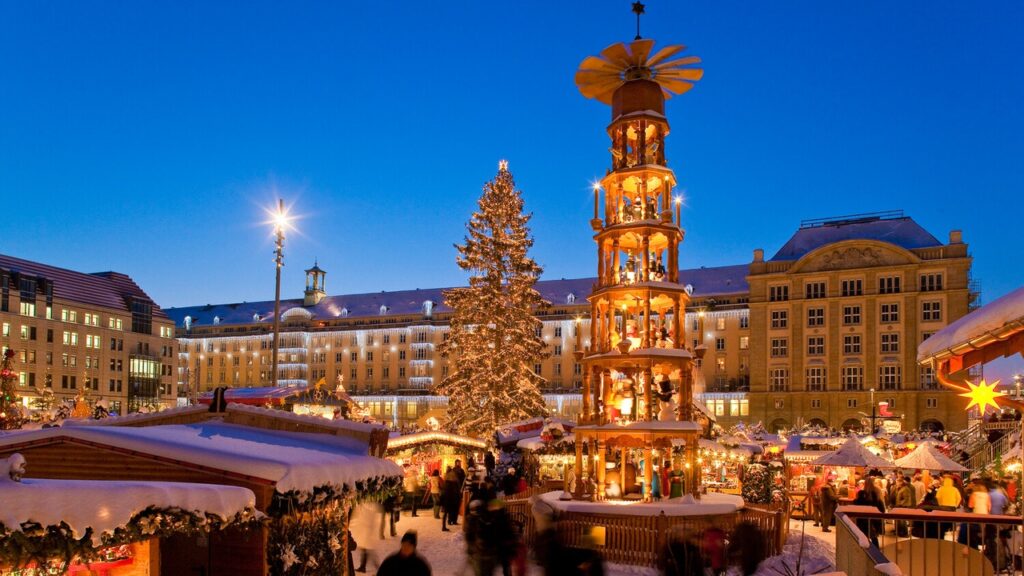
But what about all those wooden decorations? Something very common in December, especially in central and eastern European countries, are the Christmas markets. Here we can find the large wooden Christmas pyramids that decorate the center of the market (Figure 1), typical in Germany, Switzerland and the Czech Republic. The small winter figures or dioramas that adorn these pyramids represent mainly religious scenes (2-4). The carving of these images is a widespread practice also in Italy. Thanks to the growing tradition in the elaboration of wooden decorations, these artisans are in charge of extracting the full potential of woods such as maple (European sycamore), linden or olive, giving expressiveness and realism to these endearing figures that every year we place in the nativity scenes of our homes. There are multiple finishes in which we can find these figures: in their natural state, varnished or with a layer of oil paint with a later lacquering to fix the colors (5).
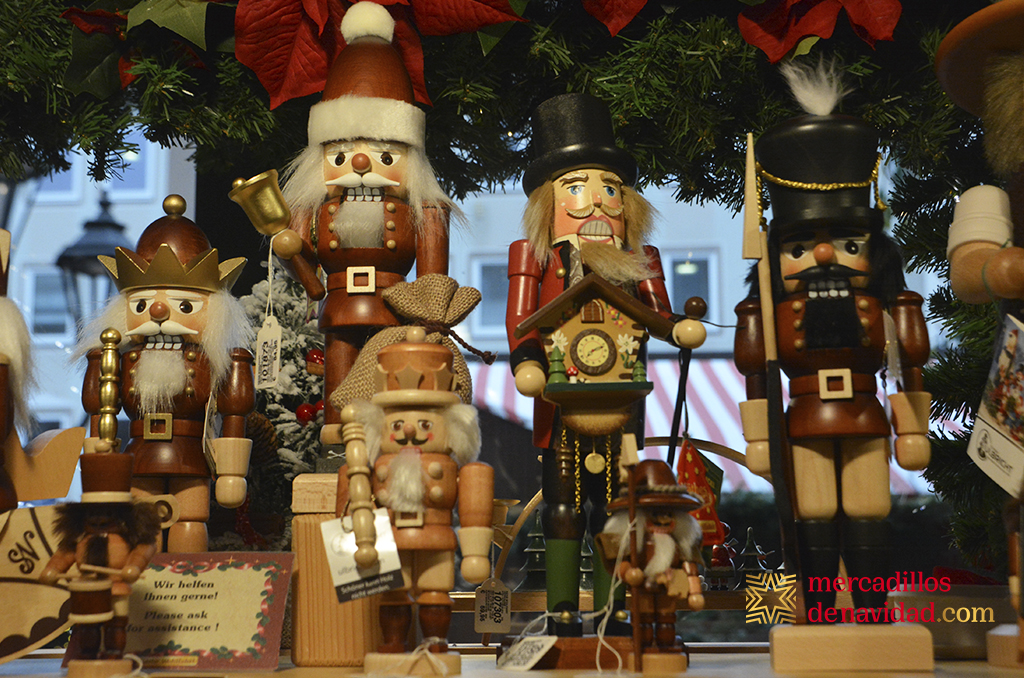
Another of the most iconic representations of the nativity that has endured over the years are the famous nutcrackers (Figure 2). These laughing soldiers are mainly made of beech or fir wood and, nowadays, we can find them all over the world, even representing different personifications. Their origin dates back to the 18th century in Steiffen (Germany), being Friedrich Füchtner their creator, who originally represented these pieces as if they were miners and forest rangers (6).
From Maderas y Chapas Blanquer we invite you to continue knowing the wonderful world of wood together. We hope that your wishes come true. We will continue helping you to fulfill them. Happy Holidays and Happy New Year!
BIBLIOGRAPHY .
- https://historia.nationalgeographic.com.es/a/de-donde-viene-arbol-navidad_9997
- https://mercadillosdenavidad.com/decoracion-y-tradiciones-de-navidad/
- https://mercadillosdenavidad.com/que-es-la-piramide-de-la-navidad/
- https://mercadillosdenavidad.com/dioramas-de-navidad-una-version-artistica/
- https://www.holyart.es/blog/navidad/belen-de-madera-las-tecnicas-de-realizacion-de-los-artesanos-de-holyart/
- https://mercadillosdenavidad.com/cascanueces-en-navidad/